
Preposterous Prelude: The Tulsa County Jailbreaks of May 1921
THE TULSA JAILBREAKS THAT CONTRIBUTED TO THE RACE MASSACRE

PREPOSTEROUS PRELUDE: THE TULSA COUNTY JAILBREAKS OF MAY 1921
by
Randy Hopkins
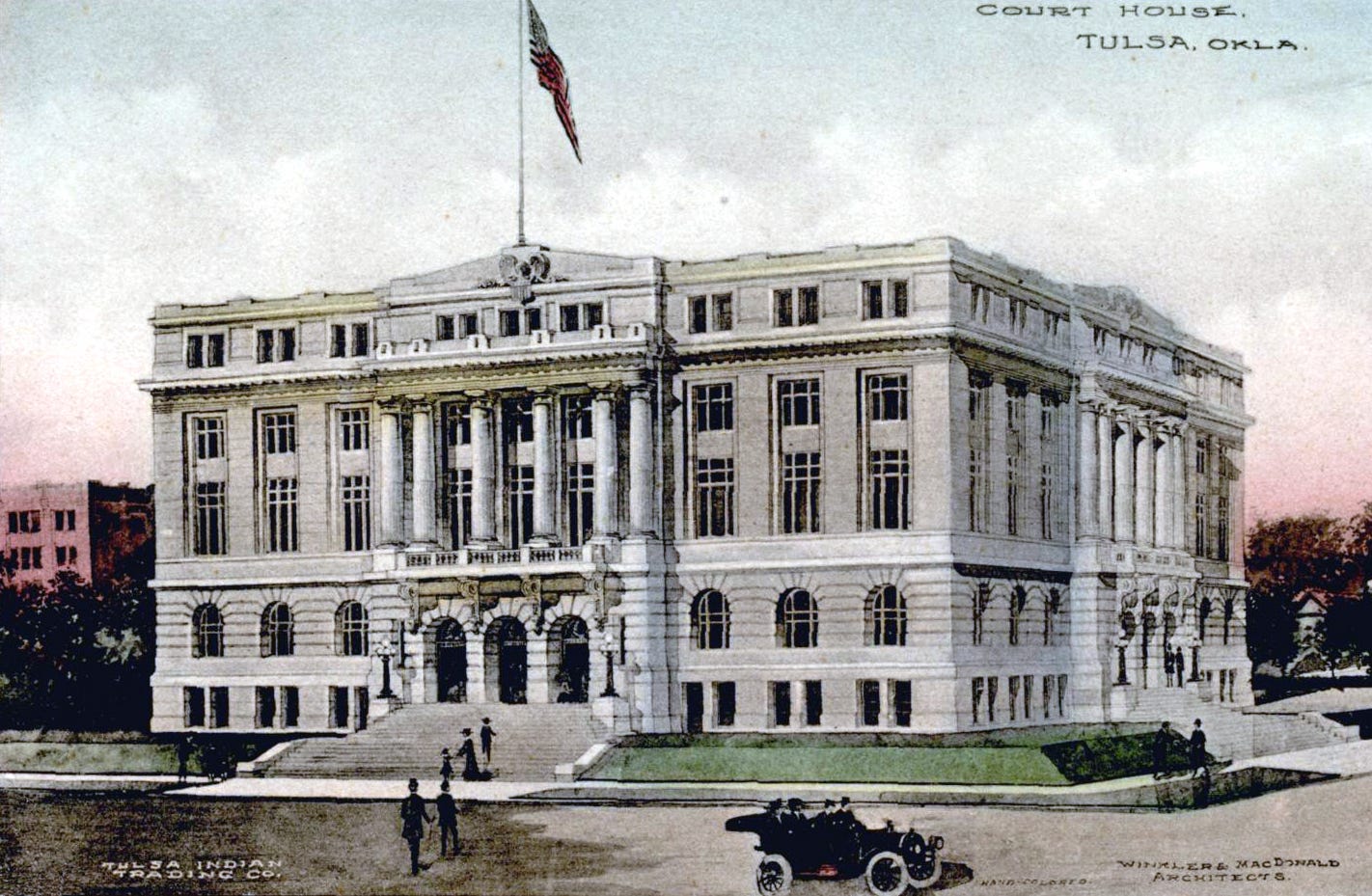
In the wee hours of the morning on Thursday, May 26, 1921, six days before the Tulsa Race Massacre, twelve prisoners broke out of the Tulsa, Oklahoma County Jail. They sawed their way through four iron cell doors, a corridor gate, and steel bars in a window.1 They overcame the fact that the jail was on the fourth floor of the Tulsa County Courthouse by tying sixty or more cotton blankets end to end, wrapping them with pieces of cloth torn from their bedding, and dangling the resulting rope down the front of the building facing Boulder Avenue.2
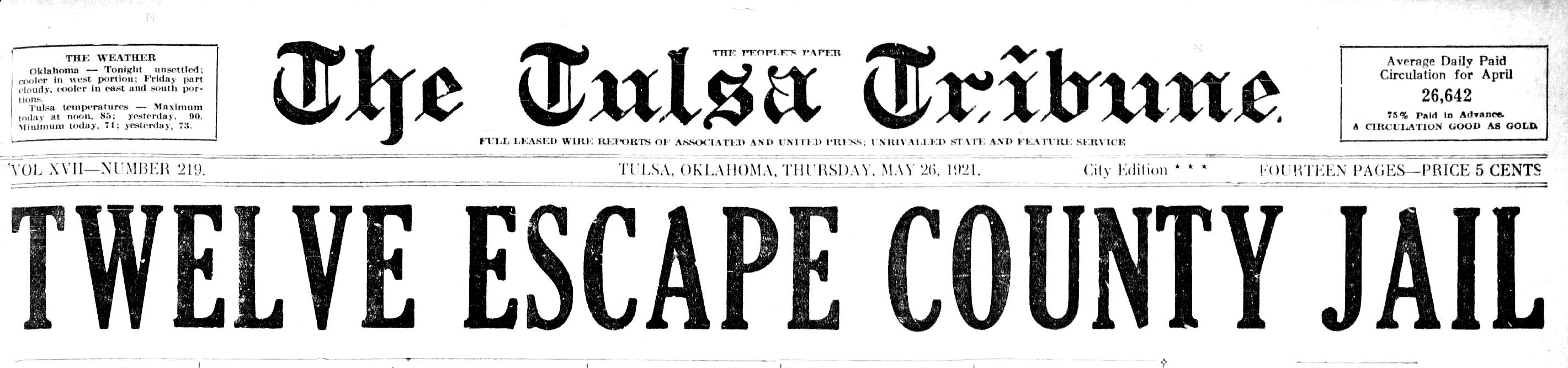
Ten prisoners shinnied down and headed off into the night. The delivery — slang for a jailbreak — ended when convicted burglar Fred Wright was caught hanging on the rope by Tulsa police officer W. B. Belcher. When asked to explain himself, Wright said that he had been visiting a friend. Belcher arrested him anyway.3
Up at the window, accused burglar Pat O’Connor saw that the jig was up and climbed to the roof. Waiting until the “coast seemed clear,” he descended on the County’s flagpole rope. The coast, however, was not clear and O’Connor was pinched when he landed.4
Meanwhile, the city police were having a hard time rousing anyone in the county jail.5 Night jailer W. L. Campbell, the only man on duty, eventually appeared and learned for the first time that things were severely amiss on his watch.6 The Tulsa Tribune reported that he “sat within 20 yards of (the delivery) without noticing the commotion.”7
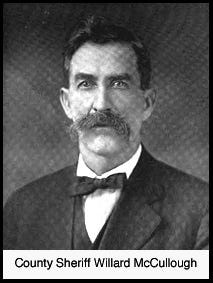
Tulsa County Sheriff Willard McCullough was in Turley at the time, but returned and ordered a belated search for the ten missing rabbits. The Sheriff faced the newspaper reporters and announced that he would have no statements until his investigation was complete. Nevertheless, he kept talking. “It appears that the delivery was unavoidable,” he declared, “the bars are not hard and those in the cells had been cut previously when another delivery occurred. They were then pieced together and this time the cuts were made in the same places.” 8
McCullough was alluding to the February 1920 mass jailbreak, the largest in Tulsa County history. The Sheriff at the time was McCullough’s predecessor and arch rival, James Woolley. In the 1920 delivery, seventeen prisoners, including accused car thief “Doc” Barker, acidified and sawed through five cells and a gate on their way to a dashingly successful escape. Besides saws and sulphuric acid, the 1920 prisoners somehow acquired a 130 foot rope. According to other prisoners, they also had seven revolvers.
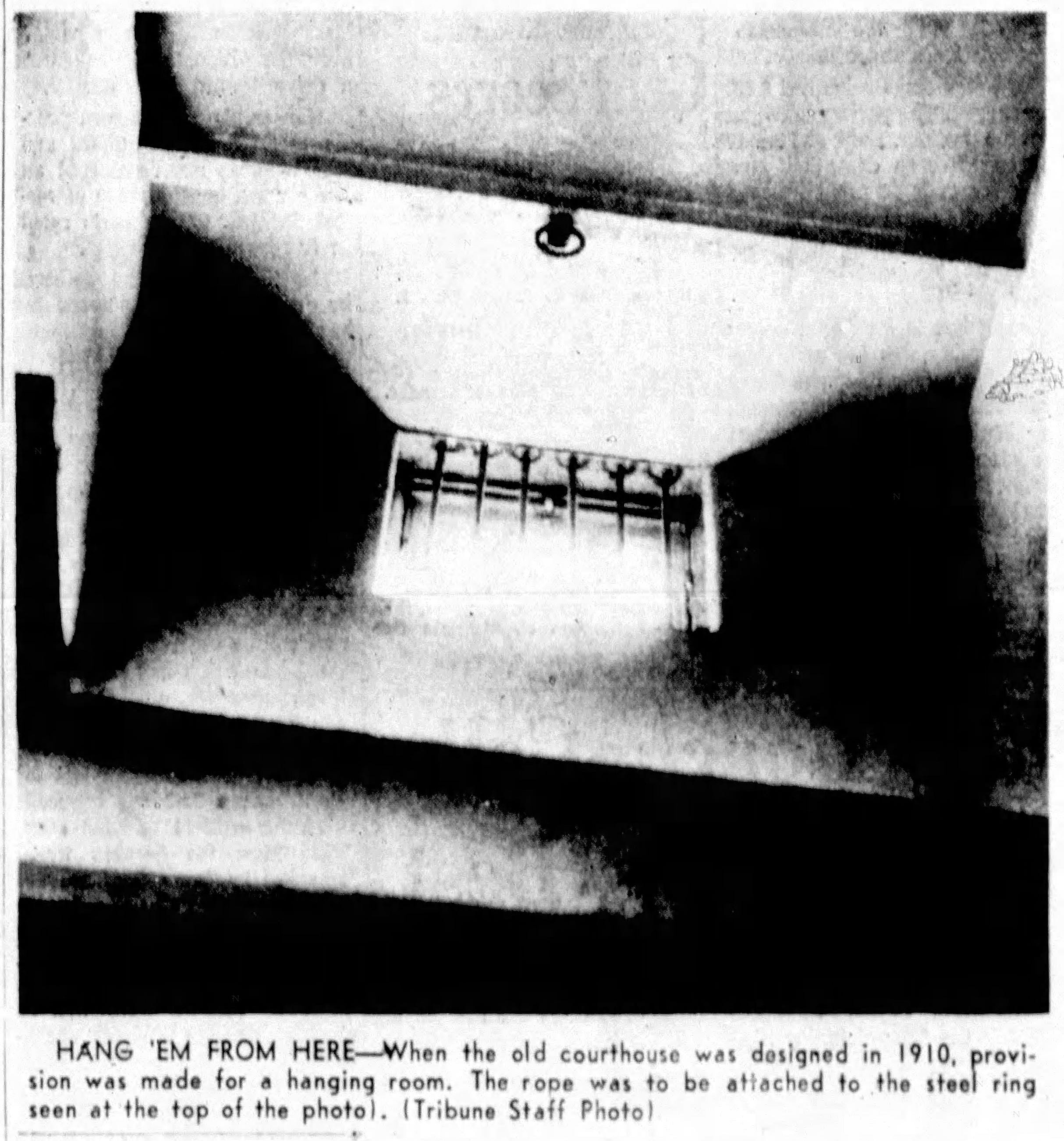
Foregoing the rope, they instead broke into the Tulsa County’s allegedly unused “death cell,” which contained a stairway of thirteen steps leading to a gallows complete with trap door and noose hook.9 From the gallows they broke through a skylight — placed there so that the condemned would see the sky before the trap sprung — and climbed to the roof. After that, they simply waltzed to liberty down an interior stairwell.10 The cell of death had set them free.
Besides flimsy iron bars, Sheriff McCullough pointed the finger of blame at two of the missing prisoners, Roy Boggs and Clarence Devoe. The two accused burglars were “allowed to run free as trustees in the aisleways of the jail.” McCullough and head jailer Walter Large opined that the two had been sawing the outside bars for six weeks, successfully secreting their tools all the while.11
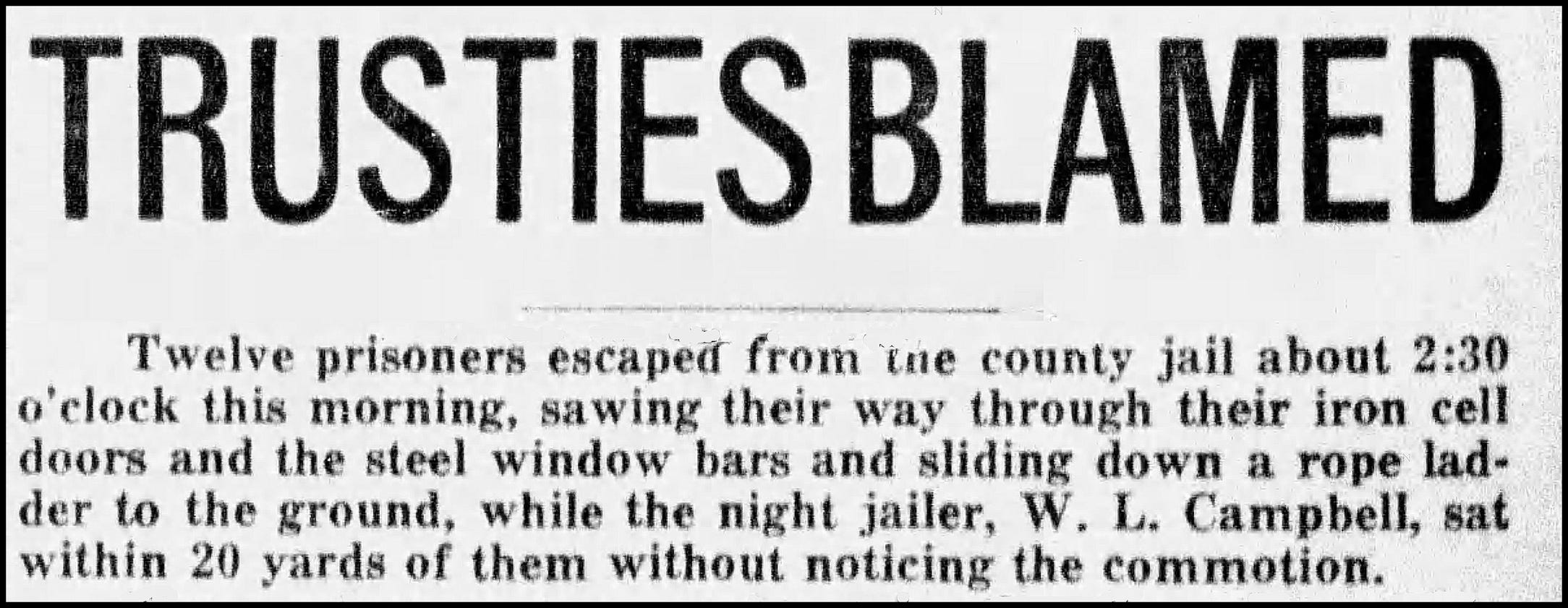
Further down in the story, the Tribune disclosed that the two trustees were twelve and fourteen years of age and were permitted the freedom of the outer runaround “because of their youth.”12
McCullough also said, “carpenters were working in the jail last night and it is possible that the sawing was done while they were pounding.”13 Why carpenters were working in the jail at night — the delivery occurred at 2:30 a.m. — was not explained. Nor was there a mention of the possibility that the carpenters might have lent a hand or at least a saw to the escape.
An inspection showed that sawing inside the individual cells had been going on for some time. Pieces of used candles were found. McCullough explained that candle tallow had been used to conceal the work being done on the bars. Acid was also employed to speed the job, as with the 1920 jailbreak.14 The reporters were shown that when a wetted finger was passed across the severed bars, a burning sensation resulted, confirming the use of acid. The prisoners were well-equipped, even apart from their access to saws and a hoard of blankets.15 Sheriff McCullough also demonstrated a detailed awareness of escape techniques, in contrast to his staff’s utter obliviousness.
One escapee was corralled within a few hours. Forrest Paul, twenty-two years old, was a former child actor from a family of actors.16 Now, he was a member of a gang of accused thieves operating out of the notorious Colorado Hotel. Five months earlier, Paul had been shot while attempting to steal furs at the Hall department store. The Tribune reported that he lingered between life and death for weeks. He was released on bail, but was imprisoned after the conviction of an associate in the Hall job.17
Upon hearing of Paul’s escape, the merchant cop who had shot him, Grant Tucker, made a beeline for the Colorado Hotel, located on North Main between Archer and Brady Streets. Tucker said he saw Paul looking out a window. Summoning Tulsa police captain George Blaine, the two confronted the Colorado’s landlady, Mrs. Mabel West. Mrs. West, older sister of the man already convicted in the Hall heist, was alleged to have told them that “Paul had gone out.” At this point, Blaine “heard a sound” and, upon investigating, found that Paul had taken sanctuary under Mrs. West’s bed.18
Paul was not immediately returned to the county jail. Instead, he was removed to the City of Tulsa’s police station. After a short stay of several hours, he was taken to the state district court, where he changed his plea of not guilty to guilty. He was then returned to the county jail, soon to be sentenced to five years in the state pen.19
Later that same day, an escapee named Lawrence Duval walked into the Sheriff’s Office and surrendered. Duval was also accused in the Hall burglary and had been Paul’s cellmate prior to the jailbreak.20 The Tulsa World initially reported that the escape window was in their cell.21 Duval would later claim that he surrendered only after assurances by the Tulsa County Attorney that he would be granted bail.22
Meanwhile, eight escapees remained on the lam. Fifty-five year old, three-term Sheriff McCullough — popularly called “Uncle Bill” — radiated confidence that they would be recovered, telling the Tribune that, “I know some of them can’t stay away from Tulsa and when they come back we’ll nab ‘em just like that, b’cracky.”23
The newspapers were allowed access to the prisoners who were still in custody and inside stories began emerging.24 The Tribune scored a scoop when it interviewed the men who had been captured at the scene, Pat O’Connor and Fred Wright. O’Connor was especially talkative, lamenting, “We wanted to get out o’ here because the jailers never gave us any ice water. We are suppose to get ice water, and it’s hot now up here.” At least they had blankets.
O’Connor bragged that the escape had been underway for three weeks. He refused to rat out who possessed the saws and claimed to have no idea how they had arrived. On those issues, he knew nothing. He took the youthful trustees off the hook, claiming, “those two boys didn’t have anything to do with cutting the outer window bars. We just took them along at the last minute.”25
Both O’Connor and Wright said that the delivery proceeded while night jailer Campbell slept in his chair a few yards away. The Tribune splashed it in ink on the front page.26
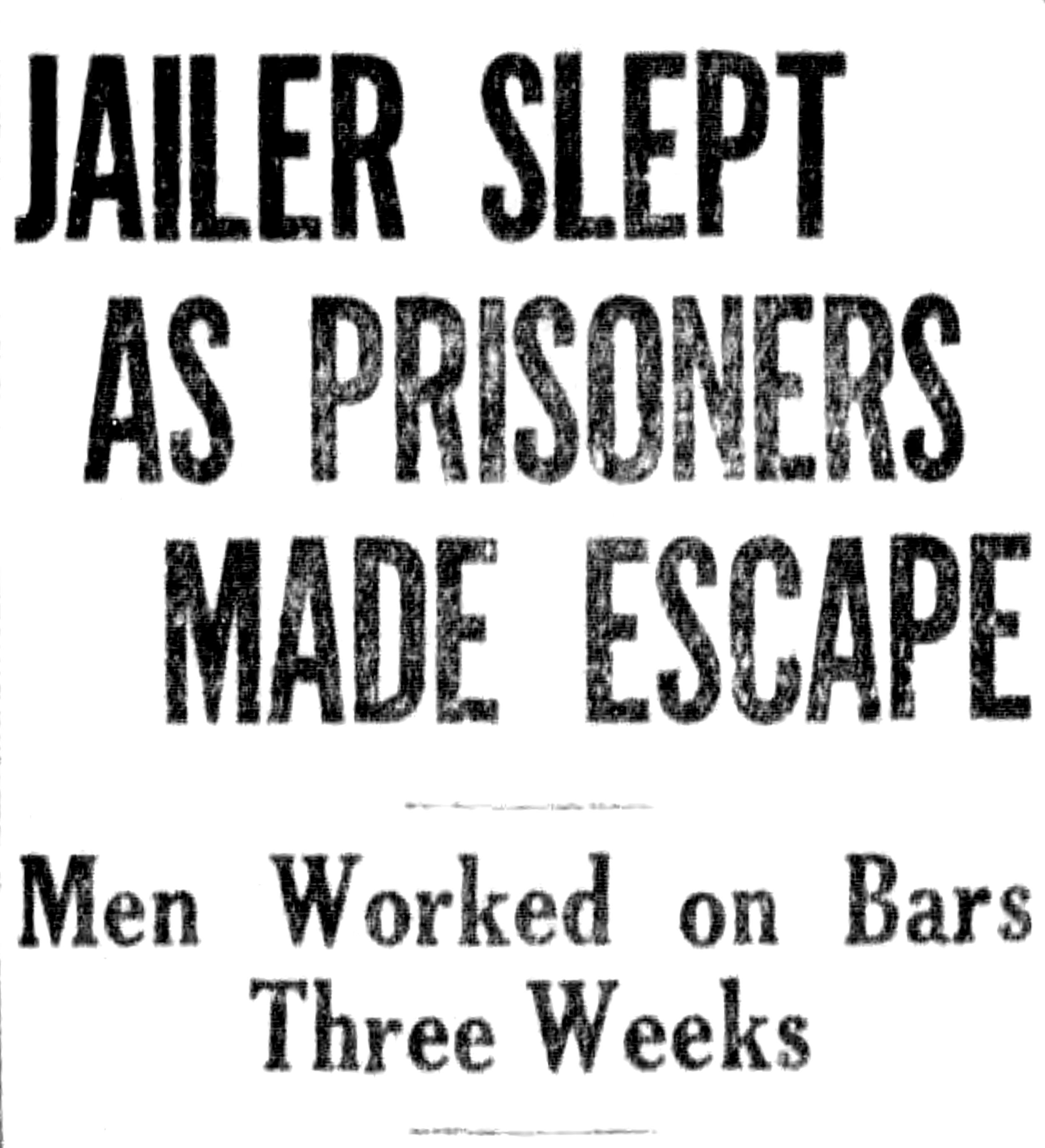
O’Connor and Wright’s tune quickly changed. The Tribune’s headline and coverage stirred Campbell to come out swinging. Age fifty-five and a professional meat cutter, Campbell strenuously denied that he had been asleep. He produced written statements from O’Connor and Wright confessing that their claims about him sleeping were “not true.”27 The nature of the persuasion, if any, offered to the two prisoners to recant is unknown, but Campbell remained as their night jailer. After one a.m. in the morning, he was the only man on duty.28
The Tribune noted that beyond his claim to have been awake, Campbell offered no explanation for how the escape could have occurred under his nose.29 Neither he nor McCullough ever explained.30 They never had to because the May 26, 1921 jailbreak, the third largest in Tulsa County history, was about to be thoroughly upstaged.
Late Sunday night, May 29, Sheriff McCullough told a Tribune reporter that he was going to the jail to make sure his jailers kept on the job.31 If the “job” included hanging onto prisoners, his efforts were fruitless.
At 7:00 a.m. on Monday, May 30, six more prisoners escaped, using some of the sliced and re-sliced bars that had twice provided what the Tribune called the “gateway to liberty” and a “viaduct to freedom.”32 Once again, a blanket rope dangled down the front of the Tulsa County Courthouse, though this time it dangled in daylight. Either the original rope had been stored intact and accessible, or another one got tied.33
Paul and Duval got away again, just four days after they “sawed the bars and strung the blankets” the first time. Duval was said to be angered at County Attorney W. F. Seaver, who had promised him bail if he turned himself in after the first break. According to other prisoners, Paul and Duval had repeatedly threatened to escape at the earliest opportunity.34
More prisoners might have got away had it not been for L. D. Beaver. Mr. Beaver was delivering bread to the jail, when he observed a fleeing prisoner, possibly one of the fur thieves. He promptly informed the jailer on duty — W. L. Campbell.35 Once again, Campbell was unaware anything was awry, even though he swore to the Tribune that he had just made his rounds.36 Once again, Campbell was unable to explain how the delivery occurred without his discovering it.
The May 30 delivery demonstrated the power of interracial cooperation, as three of the escapees were identified as negroes.37 After yet another thorough search of the cellblock, pieces of broken saws were found in the negro section.38
Sheriff McCullough provided the press with another detailed description of how the latest jailbreak went down. While both the World and the Tribune reported that the escape was through the same corridor window as the one on May 26, McCullough explained that this time the targeted window was in a vacant cell.
“Those bars were sawed in the daytime,” said the Sheriff. He explained that Forrest Paul (of all people) had been placed in the cell next to the escape window and “could reach around the space of six inches and saw while laying in his bed.” They must have “worked fast,” McCullough opined, explaining that the jailer (Campbell) “tells me he made the rounds every 15 minutes all night.”39
Head jailer Walter Large added to the ridiculousness by opining that “the window bars were cut with a saw attached to a mop handle and reached through the cells.”40 McCullough finally ordered that all blankets be removed from the cells.41
As of May 31, the six new escapees remained at large, despite a 36 hour manhunt involving most of McCullough’s force.42 All told, fourteen former prisoners were still running free. The World’s editorial page hailed it as a “A Comedy of Inefficiency.”43
In retrospect, exactly what did or did not happen during the two May 1921 deliveries is vastly less important than the fact that the Keystone Cops-type escapades were front-page news for days. Back then, the papers were the news of the day, fomenting talk, outrage and ridicule.44 Barbershop gossip. Pool hall guffaws. Social club snickering. Church service pursing of lips and shaking of heads. Awareness of the escapes spread widely.
On the afternoon of the 31st, the Tulsa Tribune published a sarcastic front page article with a new name for the Tulsa County jail — “The Sieve.”45 Richard Lloyd Jones’ newspaper put the term in quote marks directly to the left of its now infamous newspaper headline — “Nab Negro for Attacking Girl In an Elevator.” That article reported that a negro delivery boy calling himself “Diamond Dick” had been arrested for alledgedly assaulting a white teenage orphan in the downtown Drexel Building’s elevator.46 False claims of torn clothes and a scratched face were also mentioned.47
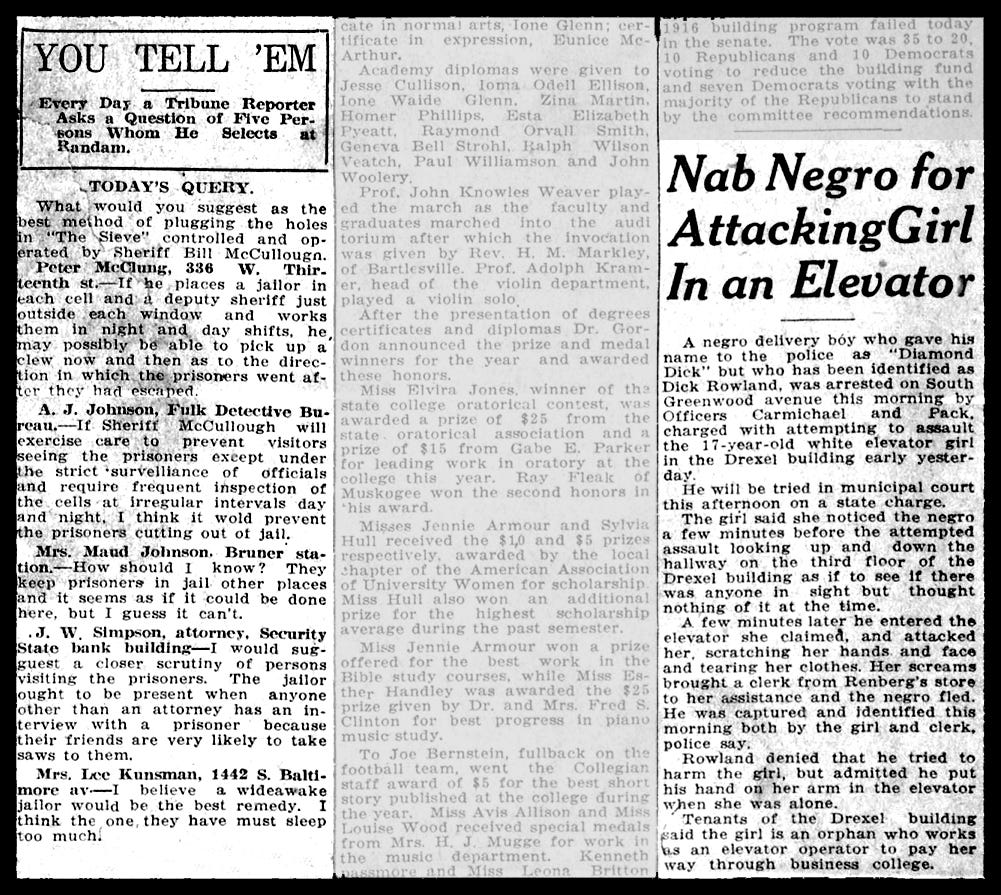
Rumors immediately spread that Diamond Dick, aka Dick Rowland, was going to be removed from the county jail and lynched. With the recent deliveries in mind, few people could safely assume that the jail was secure. This was especially true in Greenwood, where Tulsa’s black population had long been schooled to expect the worst in such matters. The previous Tulsa Sheriff — James Woolley — had turned over a white youth named Roy Belton for a public lynching just nine months earlier. Now, the new Sheriff and his jail staff had just demonstrated what appeared to be inexplicable levels of incompetence.48 The Tribune also reported that most of McCullough’s deputies were still out beating the bushes on the trail of the escaped.49
People in Greenwood arguing that the controversial teenage prisoner was safe and secure, such as deputy sheriffs Barney Cleaver and Staley Webb, were undermined from the beginning. So too were others urging caution, such as Tulsa Star newspaper publisher A. J. Smitherman.50 In the face of the news, it was hard to believe that McCullough would or could give Diamond Dick the tenacious defense that he did give him.51
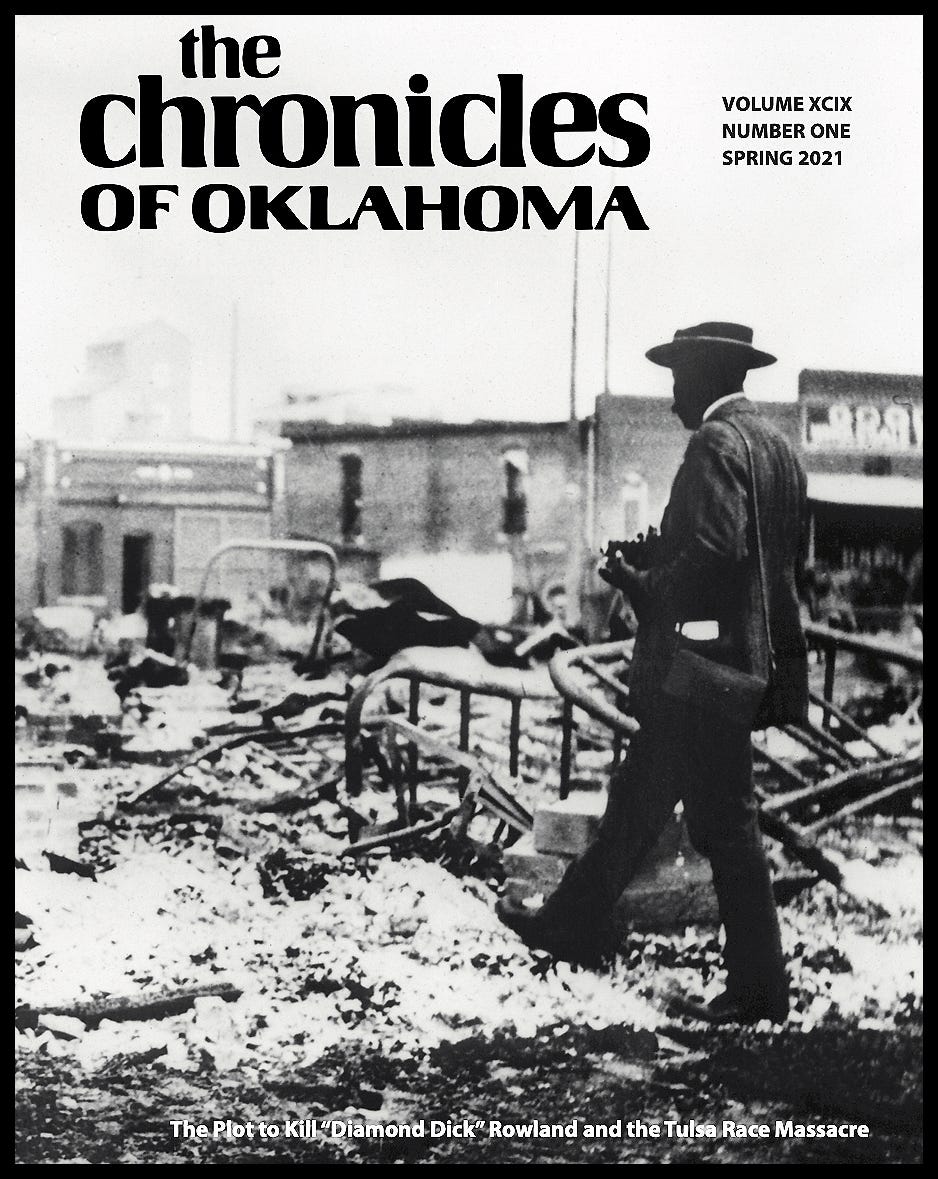
After the Tulsa Race Massacre, the uniform alibi offered by Oklahoma authorities, including the City of Tulsa, the County Grand Jury and the Oklahoma Attorney General, was that the villains were the “armed negroes” invading downtown Tulsa in defense of Rowland.52 The editorial pages of Eugene Lorton’s Tulsa World and Richard Lloyd Jones’ Tribune trumpeted the same claim, though they used identifying terms beyond the word “negroes.”53
Yet, if anyone had wanted to provoke Greenwood into a big reaction, they would have been hard pressed to top the fresh absurdities of the May 26 and May 30 Tulsa County jailbreaks, married as they were to Roy Belton’s well-publicized death rattle.
On the south side of Tulsa’s tracks, the saga of the deliveries could only fuel the growth of the white crowd assembling around the Courthouse and “The Sieve.” The Belton lynching had been a rousing public spectacle. Now, another gala looked not just readily possible, but with a far more tantalizing victim. Reports of the unmolested expansion of the Courthouse audience were further provocations in the soon-to-be incinerated Greenwood.
————————————————————————
Two and a half hours after six prisoners made their way down the front of the County Courthouse on May 30, Tulsa’s 1921 Memorial Day parade kicked off. It was promised as the biggest parade that Tulsa had ever seen. Under suddenly darkening skies, thousands jammed the downtown. Led by men on motorcycles and men on horseback, the parading yanks, rebs, doughboys, bands, cops, soldiers, students, politicians and others marched north up Main Street, passing the elevator-equipped Drexel building along the way.54
It was the morning of the alleged assault.55 A hard rain began to fall.
-----———————————————————————-
----———————————————————————-
(A special thank you to Lyndall Cole, official historian of the Tulsa County Sheriff’s Office, for sharing information, especially concerning the 1920 jailbreak. His forthcoming history of the TCSO promises to be a must-read.)
(Source of illustrations)
1960 “Death cell” photo - courtesy of Tulsa Tribune and Lyndall Cole
Other newspaper clippings - courtesy of Tulsa Tribune and Randy Hopkins
Postcard of Tulsa County Courthouse - courtesy of Oklahoma Historical Society
McCullough picture - courtesy of World Publishing Company (Tulsa, OK)
Cover of The Chronicles of Oklahoma - courtesy of Oklahoma Historical Society
“Twelve Escape County Jail,” Tulsa Tribune, May 26, 1921, 1 (quoting County Sheriff Willard McCullough and head jailer Walter Large). The location of the escape window wandered throughout the newspaper coverage. The initial Tulsa World report, just a few hours after the break, reported that only three men got out and placed the violated window in their cell. “2 Escape From County Bastile.” Tulsa Daily World, May 26, 1921, 1. The Tribune’s afternoon report, citing McCullough, described it as “the central window facing Boulder,” accessible only outside the corridor gate.
The World initially reported that the rope consisted of about 100 cotton blankets, and was seventy feet long, far longer than the forty feet needed to reach the street. Arrested escapee Fred Wright explained that the men were fearful the rope would not reach the ground and thus kept tying. The World later reduced the blanket count to around sixty. “Fail to Capture 8 Jailbreakers,” Tulsa Daily World, May 27, 1921, 8.
Tulsa Daily World, May 26, 1921, 1 (quoting Belcher, “Come on down, and make it snappy, or I’ll blow you down.”); “Jailer Slept as Prisoners Made Escape,” Tulsa Tribune, May 27, 1921, 1.
Tulsa Tribune, May 26, 1921, 1; Tulsa Tribune, May 27, 1921, 1.
Tulsa Daily World, May 26, 1921, 1.
Tulsa Tribune, May 26, 1921, 1; Tulsa Daily World, May 27, 1921, 8.
Tulsa Tribune, May 26, 1921, 1.
Tulsa Tribune, May 26, 1921, 1; Tulsa Daily World, May 27, 1921, 8.
“Tulsa Gallows - Not Used in 48 Years - Soon to Fall,” Tulsa Tribune, October 21, 1960.
The best writeup of the 1920 delivery is Lyndall Cole, “Largest Jailbreak in History,” The Shield (Tulsa: Tulsa County Sheriff’s Office, 2007). See also, “Convicted Motor Car Thieves in Jail Break,” Tulsa Tribune, February 14, 1920, 1; “17 Prisoners in a Jail Delivery,” Tulsa Daily World, Feb. 15, 1921, 1-2; “One Escapee in Jail Break Is Captured,” Tulsa Tribune, February 15, 1921, 1.
Tulsa Tribune, May 26, 1921, 1.
Ibid. The two youths were accused of burglary.
Tulsa Tribune, May 26, 1921, 1; Tulsa Daily World, May 27, 1921, 8.
For acid in the 1920 delivery, “County Attorney Gives Reward as Commissioners Fail,” Tulsa Tribune, Feb. 15, 1920, 1.
Tulsa Tribune, May 26, 1921, 1; Tulsa Daily World, May 27, 1921, 8. Only two of the twelve escapees had been convicted of the crime for which they were held. The rest were merely accused of committing crimes, including a forgery, a safecracking and assorted burglaries and robberies. The alleged safecracker, Ralph Tatum, was later fingered as one to the ringleaders of the May 26 jailbreak.
1910 U. S. Census, which identified Paul’s acting speciality as “comedy.”
Tulsa Daily World, May 26, 1921, 1; Tulsa Tribune, May 26, 1921, 1; Tulsa Daily World, May 27, 1921, 8.
Tulsa Tribune, May 26, 1921, 1.
Tulsa Tribune, May 26, 1921, 1; Tulsa Daily World, May 27, 1921, 8. For five-year sentence, “Record Is Set by Judge Cole for Four Days,” Tulsa Tribune, May 29, 1921, 16.
Tulsa Daily World, May 27, 1921, 8. The correct spelling appears to be Lawrence DeVol, later a notorious bank robber, killer, and member of the so-called Barker-Karpis Gang. His nickname was “The Chopper.” He was killed in Enid, OK after slaying a police officer. “Slain Gunman’s Companion Captured,” Enid Daily Eagle, July 9, 1936. Shortly before his death, he led 16 criminally insane inmates in an escape from a Minnesota hospital. Lawrence DeVol had a younger brother named Clarence, age about 14 in 1921, who may have been one of the two “trustees” who allegedly helped with the escape.
Tulsa Daily World, May 26, 1921, 1.
“Six Flee in Second Jail Break,” Tulsa Tribune, May 30, 1921, 1.
“Home Town ‘Pride’ To Refill Jail Says Sheriff M’Cullough,” Tulsa Tribune, May 28, 1921, 1.
While the Sheriff said the jailers had been operating under “positive orders” to inspect the cells every fifteen minutes, an inmate who did not try to escape said the last inspection was around midnight, two-and-a-half hours before the delivery. Tulsa Tribune, May 26, 1921, 1.
Tulsa Tribune, May 27, 1921, 1. O’Connor also said it was hard for some of the boys to get through the narrow hole in the window and that Wright was “black and blue” from the effort.
Ibid.
Tulsa Tribune, May 28, 1921, 1.
Tulsa Tribune, May 26, 1921. 1. For Campbell remaining as the night jailer on May 30, Tulsa Tribune, May 30, 1921, 1.
Tulsa Tribune, May 28, 1921, 1.
McCullough initially said he would make no criticism of his staff until the completion of his investigation, but that any negligence would be punished. Tulsa Tribune, May 26, 1921, 1; Tulsa Daily World, May 27, 1921, 1. No investigative report was ever issued and Campbell kept his job.
Tulsa Tribune, May 30, 1921, 1.
Ibid.
Tulsa Tribune, May 30, 1921, 1; “Prisoners Again Escape From Jail,” Tulsa Daily World, May 31, 1921, 1. The World’s editorial page claimed it was the same rope. “A Comedy of Inefficiency,” Tulsa Daily World, June 1, 1921, 4.
Tulsa Tribune, May 30, 1921, 1.
Two local private eyes saw men climbing down. But they were tailing an “other party” and did not stop to intervene. That was left to Mr. Beaver. Tulsa Tribune, May 30, 1921, 1 (J.H. Brown and Henry Wilson of the Foster Burns detective agency).
Ibid. Other prisoners who had not participated in either jailbreak quickly stepped forward to absolve Campbell from responsibility in either delivery, declaring that Paul, Duval and others had made up the story about the sleeping jailer because they did not like him. Why Campbell came to be so disliked by men so desperate to escape is unknown.
The three were Jess Johnson, Robert Thomas and Richard Crane. Unlike the other escapees, the papers did not list the charges lodged against trio. Tulsa Tribune, May 30, 1921, 1; Tulsa Daily World, May 31, 1921, 1. The sixth escapee, Charlie Kinnon, was serving a 30-day sentence for petty larceny.
“Sheriff Puts on New Guard to End Breaks,” Tulsa Tribune, May 31, 1921, 9.
Tulsa Tribune, May 30, 1921, 1; Tulsa Daily World, May 31, 1921, 1.
Tulsa Tribune, May 30, 1921, 1. Large also claimed he had never been able to find saws in the jail despite repeated searches. He said that he allowed no one except lawyers to enter the corridor to talk with the prisoners. Nevertheless, newspaper reporters appear to have had no difficulty interviewing prisoners.
Tulsa Daily World, May 31, 1921, 1.
Tulsa Tribune, May 31, 1921, 9. The back page article quoted Undersheriff Charles Price that only “black magic” could enable any further prisoners to escape. Price had apparently been brought in to tighten a ship that needed lots of tightening.
Tulsa Daily World, June 1, 1921, 4.
“Printer’s Ink Is Wise Investment,” Tulsa Daily World, Nov. 7, 1917, 2 (“If a person reads at all, he reads the daily newspaper. It is part of the everyday life of the American people…The daily newspaper can best give the constant repetition that wears away forgetfulness and forces attention.”)
“You Tell Em,” Tulsa Tribune, May 31, 1921, 1.
“Nab Negro For Attacking Girl In an Elevator,” Tulsa Tribune, June 1, 1921, 1 (state edition). The article originally appeared in the Tribune’s May 31 local issue. Before that issue was reduced to microfilm, someone ripped the “Nab Negro” article out of the front page. It survives only in the state issue, which was given a later date so that it would appear fresh when delivered to distant cities.
Walter F. White, “Tulsa Riot Based on Girl’s Mistake,” New York Evening Post, June 8, 1921, 5 (Victor F. Barnett, managing editor of the Tulsa Tribune, stated that his paper had since learned that the original story that the girl’s face was scratched and her clothes torn was untrue).
For the 1920 Belton lynching, Randy Hopkins, https://www.centerforpublicsecrets.org/post/racing-to-the-precipice-tulsa-s-last-lynching
Tulsa Tribune, May 31, 1921, 9.
“Negro Tells How Others Mobilized,” Tulsa Tribune, June 4, 1921, 1.
For McCullough’s defense of Rowland, Randy Hopkins, https://www.centerforpublicsecrets.org/post/the-freeing-of-dick-roland
Also, Deposition of W. M. McCullough, Stradford v. American Central Ins. Co., Superior Court of Cook County, No. 370, 274 (1921), 15-16 (McCullough told his jail staff to “Never open the doors. Of course, I had talked to the men and told them of my ideas of a man who would give up his prisoner, and that I would rather die than give up a prisoner of mine.”).
For City of Tulsa, “Riot Statement Made By Mayor,” Tulsa Daily World, June 15, 1921, 1, 7. For Tulsa grand jury, “Grand Jury Blames Negroes for Inciting Race Rioting; Whites Clearly Exonerated,” Tulsa Daily World, June 26, 1921, 1, 8. For the Oklahoma Attorney General, “Chief Found Guilty on Two Counts,” Tulsa Daily World, July 23, 1921, 1 (quoting assistant attorney general Kathryn Van Leuven).
“ “Bad N*****s,” ” Tulsa Daily World, June 4, 1921, 4 (lead editorial below the paper’s masthead); “It Must Not Be Again,” Tulsa Tribune, June 4, 1921, 8 (same). See also, Richard Lloyd Jones, “Powder of Race Hatred Lighted By Spark of Crime,” Chicago Tribune, June 2, 1921, 3.
“Uniformed Men March in Parade,” Tulsa Daily World, May 29, 1921, 1; “Tulsa Bows in Honor of Dead Heroes,” Tulsa Tribune, May 30 ,1921; “All Tulsa Pays Homage to Dead,” Tulsa Daily World, May 31, 1921, 1.
For more on the elevator incident, Randy Hopkins, “The Notorious Sarah Page,” at https://www.centerforpublicsecrets.org/post/the-notorious-sarah-page
Also, “The Plot to Kill “Diamond Dick” Rowland and the Tulsa Race Massacre,” at https://www.centerforpublicsecrets.org/library/categories/randy-hopkins
Extraordinary research/handsomely written. The end notes alone make for fascinating, historical stories. Loved it!
Dr. Banner is back!!! Well done!!!